Some people bury what they really want because they're afraid of being vain, or selfish, or otherwise being judged. This behavior will hinder you in your goals, so this is the first step. It doesn't matter what you want, somebody can always be found to judge you for it. Ignore them. If you aren't clear on what your real goals are, you can't pursue them effectively, and you may end up giving up because you are chasing a goal you don't actually want. It's also important to keep in mind that the best person to determine your goals is you, as only you can know or decide what you really want. This also involves being honest with yourself about the amount of effort and consistency you are putting in to your fitness. One of the best ways to address this is to first understand that your goals are probably a lot simpler than they seem to be.
Boiling them down to the most basic concepts makes it easier to learn how to accomplish them. All fitness goals, at the base level, can be boiled down to: Altering body composition (trimming up, bulking up, cutting fat, getting definition, etc)Improving physical performance (getting stronger, running faster, improving endurance, jumping higher, etc)Many people have some combination of both of these goals. If you do, it will often make it easier to choose which of them has a higher priority for you (which will circle back to Step 1). Step 3: Refine Your Goals. Altering Body Composition. All goals in this category can be refined down to a combination of the following two changes: Reducing the amount of fat on your body. Increasing the amount of muscle on your body.
No matter how you want to look, it will always be a matter of reducing fat and increasing muscle to varying degrees. Looking like Brad Pitt in Fight Club requires building less muscle and cutting more fat than would looking like Chris Evans in Captain America, for example. Increasing Physical Performance. This is mostly a matter of choosing an exercise program (or combination thereof) that fits with the type of performance you want to improve. You can read more about this choice in Step 5.
You may also need to alter the macronutrient makeup of your diet to better support your training, which you can read more about in Step 4. Step 4: Fixing Your Diet. In order to accomplish your fitness goals, you must ensure that the food you eat supports them. At the most basic level, you should keep the following in mind: To lose weight, you must eat fewer calories than you use - a deficit.

Keep in mind that caloric math is imprecise and that this is an estimate only. You may need to adjust over time based on what you see on the scale. Recommended tools for calculating TDEE: Calculate your calorie and macronutrient needs.
The calories you eat each day will depend on your goals. General recommendations are to stay within a variance of 5. TDEE. Next, estimate your your macronutrient goals by following this guide from the FAQ. Create a meal plan.

We've provided a guide for creating a meal plan in the FAQ, here. For additional ideas about specific foods, you can have a look at the Resources section and the Related Subreddits section. Track your food. This is necessary. In order to accomplish goals that depend on what you eat, you must know for sure what you eat and track trends over time. Using one of the recommended calorie tracking websites, begin tracking all food that you eat. If you have never done this before, it may feel difficult and time consuming, and that is normal. Once you stick with it long enough and build a habit, it will become much easier.
Personal Training for women. 10 Minute Workout for Weight Loss, Fat Loss, & Muscle Gain Dr. Dan Pompa with HGH Stimulation - Duration: 5:38. Our beginner program will prepare you for a sprint distance triathlon in. We understand that everyone has a different base fitness level and background in each of the 3. Click to view the Beginner Tri Program Calendar. The Nerd Fitness Academy. Our ebooks have evolved! Back in October, we launched a beta version of the Nerd Fitness Academy with our first course: Women’s Fitness 101. In that first week, over 1400 rebel women enrolled, and. The Ultimate Beginner's Guide to Fitness will teach you the fundamentals of training, nutrition, and supplementation in only 30 days.

Additional resources. See the Diet Details section of the FAQ for more information on what and how to eat better./r/Fitness regular /u/sknick. If your goal is simply to lose fat, this can be done via diet alone, and exercise (while helpful), is not actually necessary. This is important to know if you have physical restrictions or medical conditions that prevent you from being able to exercise. Meanwhile, if you want to build muscle, you will need to do resistance training of some kind.
As a beginner, the best thing you can do is leverage someone else's knowledge to learn how to exercise properly. To do this, start with an existing exercise routine that was created by an experienced professional, not one that you tried to create yourself. You wouldn't work on your own car without any experience, why try to work on your body in the same manner?
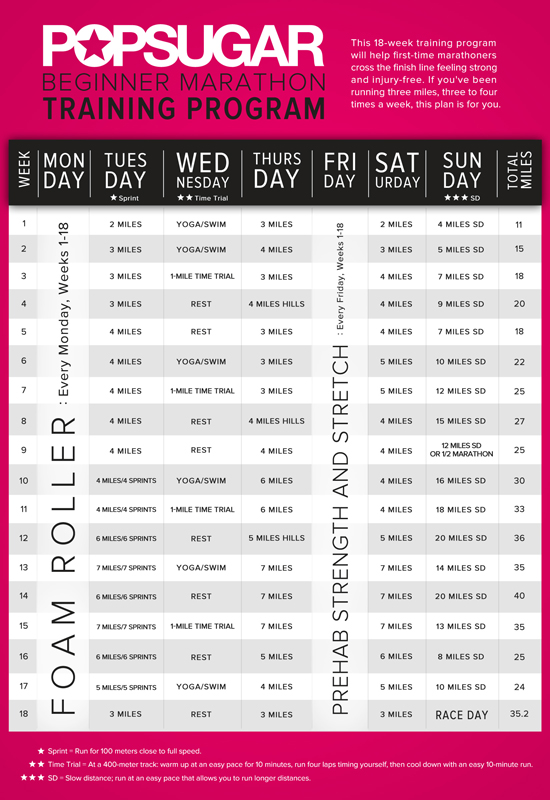
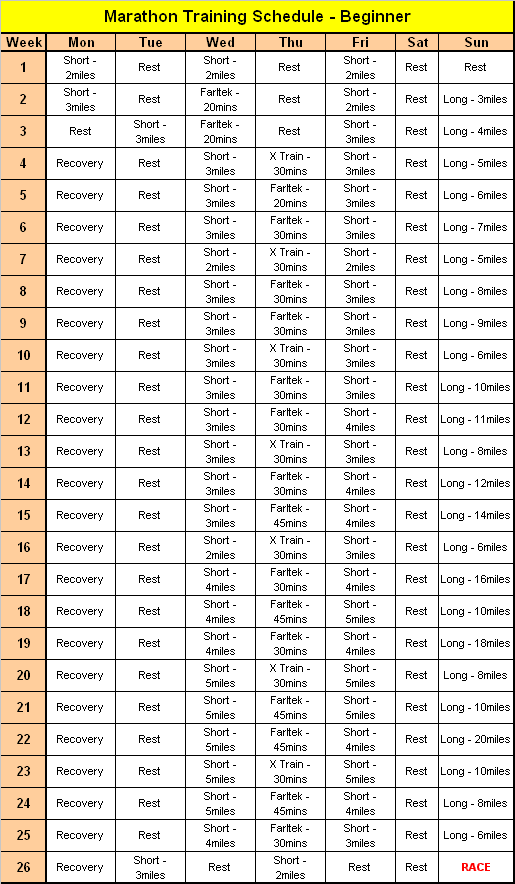
A training programme for beginners. I joined a running club with a beginner program. I just need to keep the faith and my confidence going which I hope will improve with my fitness.
Exercise can generally be broken down into four categories: Some other factors to consider when choosing a routine: What equipment you have access to may limit your options. A barbell routine may not be a good fit if you can't afford a gym membership. Your schedule. If you only have 2- 3 days each week when you have free time to work out, a 5 day bodybuilding routine may not be a good fit. The best program is the one that you will stick to. Consistent effort over time is more important than selecting .
It has collected all the standard information we have in this wiki, reduced the number of questions to a bare minimum, and recommends the best program for you to meet your fitness goals. For a curated list of additional programs that cater to all ability levels, check out our Programs page. You can also see the Exercise section of the FAQ for more detailed information. Recommended Routines.
Resistance Training. Using your muscles to move an external load.
This is how you get stronger and build muscle mass. There are many different ways to go about this, but all of them will work with similar levels of efficiency depending on your specific goals. The most important part in choosing one of these programs is finding one you will stick to. Choose a category below that matches your goals or other restrictions you may have for resistance training. For more general info on Resistance Training, see Ex. Rx's Weight Training Guidelines. Going Further: These programs are all for beginners and novices to resistance training.
Eventually you will need to find a new program or begin to create personalized programming for yourself. At this point, full body programs may not be ideal, and you may wish to investigate . This is how you improve cardiovascular health and general endurance.
There are plenty of ways to improve overall conditioning, so they've been broken down into 4 broad categories: Flexibility & Mobility. Flexibility and mobility are roughly the same concept, describing the ranges of motion that a person can move through. There are many ways to improve flexibility and mobility - stretching, foam rolling, and mobility exercises. In general, foam rolling and mobility exercises should be included in your warmup, and stretching should be done after a workout. See /r/flexibility for more specific info on this topic. Activities & Sports.
Anything else that simply gets you up and moving. There are many examples, such as.
Simple Steps to Building Beginner Workout Programs. EVERY NEW CLIENT IS DIFFERENT. They come from different backgrounds, have different challenges, and therefore have different needs. As a trainer developing your clientele, the goal is to make your clients feel comfortable and safe with exercise as quick as possible. In addition, it’s important as a trainer to stay consistent with your programming in order to establish your reputation. A common problem for new and experienced trainers is that they don’t know how to program workouts for beginner clients. You have likely been working out for years and may have a difficult time putting yourself in the client’s shoes.
A “make or break”. Usually, introductory packages are small and the trainer might only have 2- 3 weeks to impress the client and entice them to commit.
The Focus System is a simple, straightforward system that’s specifically designed to create effective workouts for beginner clients. With this program you will be able to cover all the bases and design a great program easily and quickly. By following the six steps below, you will be able to program an effective beginner routine in less than 3. The 6 Steps to Creating Beginner Workout Programs.
Step 1: Rep Range (The Great Decider)In the Focus System, rep range is the deciding factor. For example, if they want to train for power, their rep range is 1- 5, muscle endurance 1. The rep range dictates the number of sets and exercises in a workout. If a client is training in the 1- 5 rep range, their sets are going to be higher than in the 1.
To take this point one step further, if the client is doing multiple sets in the 1- 5 rep range they will be completing fewer sets over the course of the workout. Efficiency of movement is also less important when working muscular endurance. There will be less of a focus on perfect form, and neurological fatigue isn’t as much of an issue as it is with the power workout. Rep range will also dictate the type of exercise that you will include. If the workout includes exercises that sit in the 1- 5 reps range, you probably will not include biceps curls.
You would opt for power- exercises; perhaps a deadlift or squat variation. Although you may need to perform power training on isolated muscle groups for certain sports–it’s just not the norm for the average client. Tempo to a degree is also determined by rep range. A power exercise may include a 1- 0- 1 (1s eccentric – 0s pause – 1s concentric).
When trying to improve muscle endurance, there are a number of different tempos that can be useful. The most common tempo that’s used is the 3- 0- 1 for muscle gain during hypertrophy workouts (6- 1. Lastly, you can easily determine what rest intervals are appropriate based on rep range. A power reps range of 1- 5 reps will require 2- 3 minutes to replenish the creatine phosphate system. Your goal is to train the client efficiently.
If the client is fatigued, the training will be counterproductive. Muscle endurance, on the other hand, requires much shorter rest intervals. The goal is to improve the client’s recovery, so that’s the system that you need to stress. This article is quite thorough and detailed. In response to demand, I’ve made it available as an Ebook for free download. Enter your email below to get that Ebook sent to your inbox: Step 2: Primary Exercises.
The primary exercises are the focus of the workout. You can expect the client to get their gains primarily from these. Therefore progression is measured based on the client’s performance on the primary exercises.
If they’re getting stronger at the front squat, then watching for progression on the leg extension becomes a moot point. That said, you should still track all the sets and reps of each workout. To pick the primary exercises, I use a combination of intuition and knowledge. I do an analysis of the client’s body type, and in combination with their goals and assessment, decide on the MOST IMPORTANT exercises.
These exercises are exclusively large multi- joint exercise and are usually some variation of the squat, deadlift, lunge, chin up, row, or chest press. The reason for so much emphasis on the primary exercises in the Focus System is two- fold: Beginner clients cannot get good at more than 2- 4 exercises at one time. The client will not learn the form effectively and won’t build up the supporting structures to continually progress. It’s much easier to sell a client on 2 exercises than 2. Here’s an example using the reps schemes described above: In a power workout where the client would be working within the 1- 5 reps range, two primary exercises might be the sumo deadlift and bench press. In the 1. 2- 1. 5 muscle endurance reps range two primary exercises might be the Goblet squat and alternating row.
Step 3: Secondary Exercises. The secondary movements are where you can have the greatest flexibility and the most fun. These can be programmed as supersets or circuits. Although form is important, it is not necessary to be as picky as with the primary exercises. Remember that your purpose with secondary exercises is to support the primary and take the client one step closer to his or her goal. This is where you can include things like single joint movements, abdominal work (rotation, flexion, anti- rotation), and single- leg exercises.
In a power workout where the primary exercises are the sumo deadlift and bench press, you might choose barbell glute bridges and dumbbell skull crushers as secondary exercises. For the muscle endurance workout, the example primary exercises were the goblet squat and alternating row. The secondary exercises could be a single- leg squat and dumbbell cross- body hammer curl. Step 4: Tertiary Exercises. Tertiary exercises can be built into one of two different spots in the Focus System. I’ve now expanded the term to include prehab. Rehab does not necessarily mean that the client has an injury; it could be an imbalance that needs to be addressed.
The unique aspect of the tertiary exercise is that it won’t change depending on the type of workout. If the client needs rehab exercises or to fix an imbalance, it doesn’t matter whether they’re training power or muscle endurance.
Like any aspect of fitness, it has a time and place, but usually sufficient cardio can be programmed into a resistance training routine with appropriate attention to rest intervals. That said, steady state cardio is meditative and can be very beneficial for the mind. For a client with a stressful job, unloading on the treadmill, bike, or elliptical for 3. The cardio protocol that you prescribe for your client has to fall in line with their goals. Cardio can be counterproductive if improperly programmed. For example, a hypertrophy workout should not have much, if any, steady state cardio.
For muscle endurance training, try a combination of steady state running with hill or interval training. Step 6: Dynamic Warm Up and Myofascial Release. The dynamic warm up depends on the client’s comfort and skill level in the gym and the nature of the workout. For example, a power workout will likely have more hip and shoulder mobility drills. In addition, since movement efficiency is of the upmost importance, include more myofascial release. The warm up for a muscle endurance workout will include more movement prep work and less individual dynamic stretches. In addition, you might opt to do the myofascial release at the end of the workout.
A beginner client with low efficacy will be reluctant to do a long, dynamic warm- up by without you there. If this is the case, perform the warm up with the client for as long as needed until he or she becomes more confident in the gym. I found that doing the warm up with my client during their initial anatomical adaptation phases was a good guideline. If the client is more confident then they can handle a warm up with dynamic stretching and myofascial release. Their goal is fat loss and to improve core strength. Please note that this program is not meant to teach you what exercises to include. It wasn’t designed for a specific client.
Rather it is meant to illustrate the Focus System. The following section breaks down the workout in order to showcase each of the 6 steps. Day 1 (full body push)1. Squat (Primary) 4*8- 1. Bench Press (Primary) 4*8- 1. Tight Pushup (secondary) 2*1. Abs Plank – Fast Hands (secondary) 2*5 superset chest stretch (tertiary)5.
Speed interval 1. MHR6a. Dumbbell skull crushers (secondary) 2* 1. Single leg squats (secondary) 2*6- 8. Scaption (tertiary) 2*8- 1.
Day 2 (full body pull)1. Dead Lift (primary) 4*8- 1. Chin up (Primary) 4*8- 1. Speed interval 1. MHR4a. Glute thrust 2*6- 8 (secondary)4b.
Side bridge with minor twist 2*1. Speed interval 1. MHR6a. 1 arm bent over row 2*8- 1. Glute ham raise 2*6- 8 (secondary)7. Pallof press 2*2. Cardio guidelines – 2x/week.
If, for example, I have a 1a and 1b then the exercises are meant to be done in a superset. The Workout Broken Down. Step 1: Rep Range.
The client is working throughout a variety of rep ranges. Since the primary goal is fat loss, the client needs to build up some muscle so have them working within hypertrophy ranges mostly. The workout shifts to becoming more metabolic when the client gets to the secondary exercises. The reps increase and speed intervals are placed throughout.
Step 2: Primary exercises. I wanted to make both days full body so split the workout into push and pull.
In choosing the primary exercises I also wanted the rep range to be in the hypertrophy range so I chose large multi- joint exercises and not power movements. Since the client is intermediate they would be able to handle 4 primary exercises. The squat, bench press, chin up and dead lift are all done by themselves so the client can focus on performing these movements well. Step 3: Secondary exercises. This is where the most variance takes place and you can be very creative.
In choosing these exercises I wanted to stay true to the push/pull split and put a special focus on core strength.


/https%3A%2F%2Fimage.slidesharecdn.com%2Fpuntosenautocad-160520024627%2F95%2Fpuntos-en-autocad-2-638.jpg%3Fcb%3D1463712412)
/http%3A%2F%2Fk32.kn3.net%2Ftaringa%2F9%2FA%2FB%2F7%2F4%2F4%2FAlexbjm%2FA24.png)
/https%3A%2F%2Fphotos.zillowstatic.com%2Fp_e%2FIS27abdqu1g7b11000000000.jpg)
/http%3A%2F%2Fwww.nhvweb.net%2Fnhhs%2Fmath%2Ffiles%2F2013%2F07%2Fpeer-tutor4.jpg)